
Tightening terminal security shouldn't create a bottleneck
Wednesday, October 14, 2026

If implementing stronger access control creates delays, drivers will find workarounds, operators will have to deal with more exceptions, and the business will pay in lost productivity and added risk. Here’s a practical “control without slowdown” playbook terminal teams can use to tighten access without killing throughput.
1. Validate before the gate
Don’t let the terminal entry be the first place a problem shows up.
Pre-validate driver + carrier + truck + product eligibility before arrival (or at least before the queue starts stacking up).
Goal: fewer “pull aside and call dispatch” moments.

2. Give exceptions a real process (and a lane)
Most delays aren’t caused by routine loads. They come from the weird ones. Route common exceptions (expired credentials, wrong vehicle, early arrival) to a separate path, so 95% of trucks aren’t waiting on the 5%.
3. Use risk-based checks (not “one-size-fits-all” friction)
Not every move needs the same level of scrutiny.
Apply stronger controls where risk is highest: new drivers, unfamiliar carriers, unusual products, off-hours activity, or out-of-pattern loading behavior. Routine transactions shouldn't carry the same level of friction.
4. Make approvals crystal clear in the moment
Good access control shouldn’t require interpretation.
When entering the terminal and the rack, it should be obvious: allowed / not allowed / allowed with a specific condition.
If people are making judgment calls at peak times, you’re adding minutes you can’t afford.
Toptech's Load2day platform includes the Driver Connect app, so that drivers can confirm their order eligibility before even driving to the terminal.
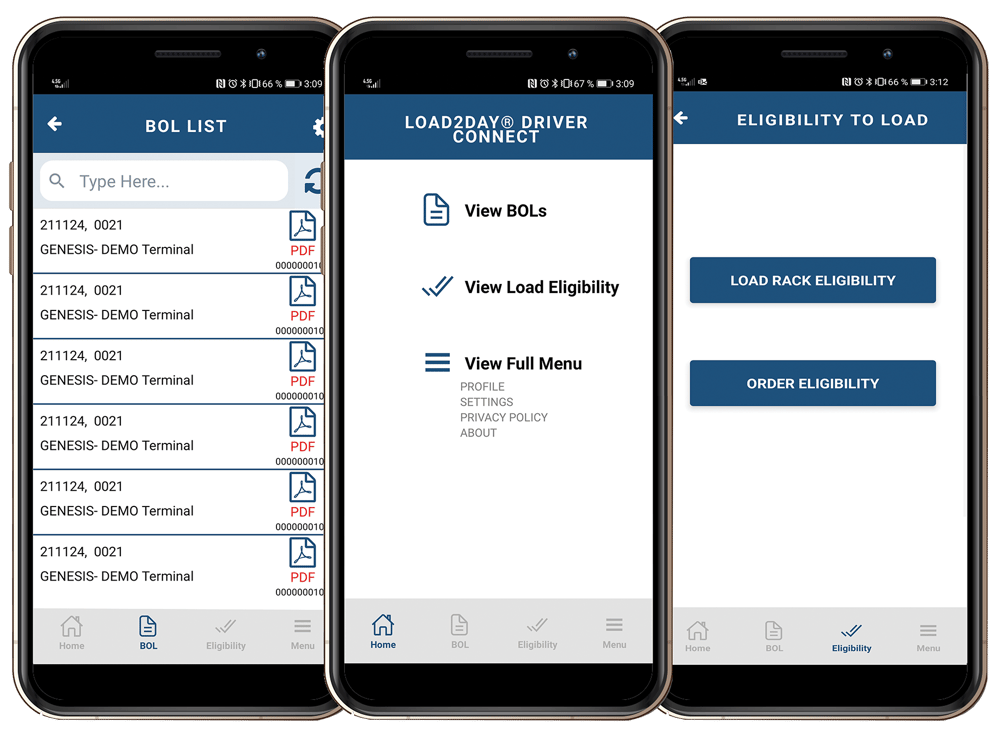
Load2day Driver Connect app screens
5. Plan for failures without stopping the line
Ask: “What happens if the network drops, a reader fails, or a device freezes?”
Build in fallbacks that keep safe operations moving, without turning into a free-for-all.
6. Separate identity from permissions (and audit both)
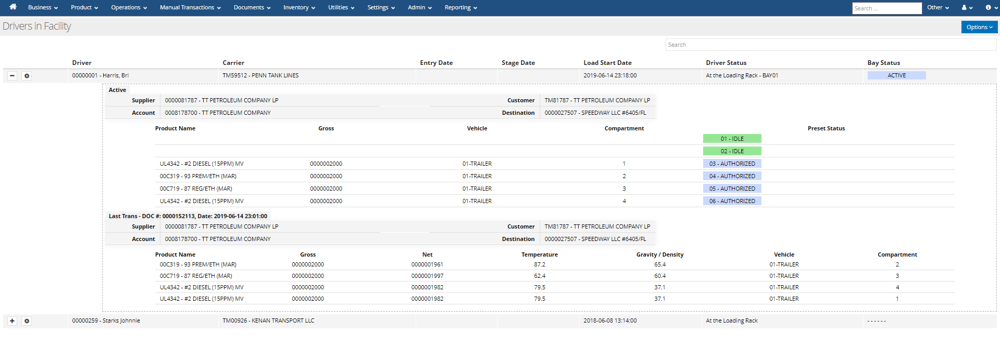
A lot of terminals can confirm who someone is, but struggle to confirm what they’re allowed to do right now.
Treat those as separate checks and keep the audit trail straightforward: who, what, when, where, and why (especially for overrides).
7. Allow overrides, but make them deliberate
Overrides are part of real operations. The problem is untracked overrides that turn into “just how we do it.” Require a reason code, capture who approved it, and review override patterns weekly. If you can’t trend it, you can’t control it.
Take aways
The common thread across all seven practices is simple: don't make the gate the first place a problem is discovered. The more validation and decision-making that happens upstream, the easier it becomes to maintain strong control without sacrificing throughput.
Clear rules + early validation + solid exception handling keep access control strict, without turning it into a throughput hit.
The broader lesson is that strong access control and operational efficiency aren't competing objectives. The most effective terminals treat access management as part of the loading workflow itself, using automation, validation, and exception management to reduce risk while keeping product moving. This will mean:
- Fewer gate meltdowns (because eligibility is checked earlier, and exceptions have a lane)
- More predictable turn times (because judgment calls and ad hoc overrides stop stealing minutes)
- A cleaner audit trail, without turning security into a throughput tax
As terminals look for ways to strengthen security, the goal shouldn't be more checkpoints. It should be fewer surprises.
When eligibility is validated early, exceptions are handled deliberately, and access rules are clear, security becomes part of the operation instead of an obstacle to it. One question worth tracking for the next two weeks: How many minutes per shift are lost to access and authorization exceptions? The answer may tell you more about both your security posture and your throughput than you expect.
If you’d like to learn how Toptech’s Load2day is specifically designed to reduce bottlenecks and improve gate-to-gate times, visit our product page or contact Toptech to request a demonstration.

Toptech Systems is a proud member of the global IDEX family which is recognized as the premier provider of Fluid and Metering Technologies, Health and Science Technologies, Fire and Safety Products, and Dispensing Equipment.

ABOUT US
MARKETS
PRODUCTS

Toptech Systems, Inc.
1124 Florida Central Pkwy
Longwood, Florida 32750
+1 (407) 332-1774
Toptech Systems NV
Nieuwe Weg 1 – Haven 1053
B-2070 Zwijndrecht / Belgium
+32 (0)3 250 60 60