
TMS6 vs TMS7: Benefits of Upgrading Terminal Automation
Tuesday, November 10, 2026
Still Running TMS6? Here's What You're Missing in TMS7
For many terminal operators, TMS6 has delivered years of reliable service. It has handled truck loading operations, inventory control, driver access management, and transaction processing across fuel, chemical, and bulk liquid terminals around the world. But terminal operations have changed significantly since TMS6 was first deployed.
Today's terminals face rising throughput demands, stricter cybersecurity requirements, increasing data integration needs, and growing pressure to support remote operations and real-time visibility. As a result, many operators are evaluating whether it's time to move from TMS6 to TMS7.
While both systems provide the core functionality needed to automate terminal operations, TMS7 was built to address the realities of modern terminal automation.
This article explores the key differences between TMS6 and TMS7 and highlights what terminal operators gain from upgrading.
Why Operators Are Moving Beyond TMS6
TMS6 remains a capable platform, but many terminals are experiencing challenges that are difficult to address with older architecture:
- Aging hardware and operating systems
- Reduced supportability of legacy infrastructure
- Growing cybersecurity expectations
- Increased demand for enterprise integration
- Challenges scaling across multiple terminals
- Limited access to modern user experiences and reporting tools
Rather than simply maintaining legacy systems, operators are increasingly using upgrades as an opportunity to modernize operations and prepare for future growth.

As infrastructure ages, maintenance costs often increase while flexibility decreases.
Related link: 5 ways TMS7 will improve your terminal operations.
TMS6 vs TMS7: Key Differences
Modern Architecture
One of the biggest differences between TMS6 and TMS7 is the underlying platform architecture.
TMS7 was designed as a modern, service-oriented platform that supports current operating systems, databases, virtualization strategies, and integration approaches.
Benefits include:
- Easier deployment and maintenance
- Improved scalability
- Greater flexibility for system expansion
- Better alignment with current IT standards
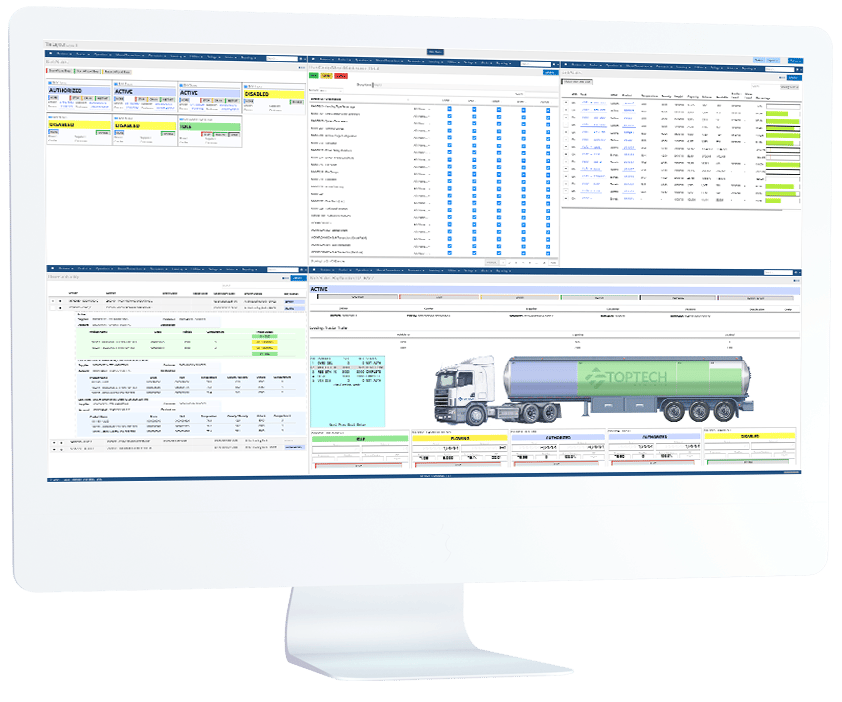
For organizations pursuing broader digital transformation initiatives, TMS7 fits more naturally into today's enterprise technology environment. Here’s a rundown of the differences:
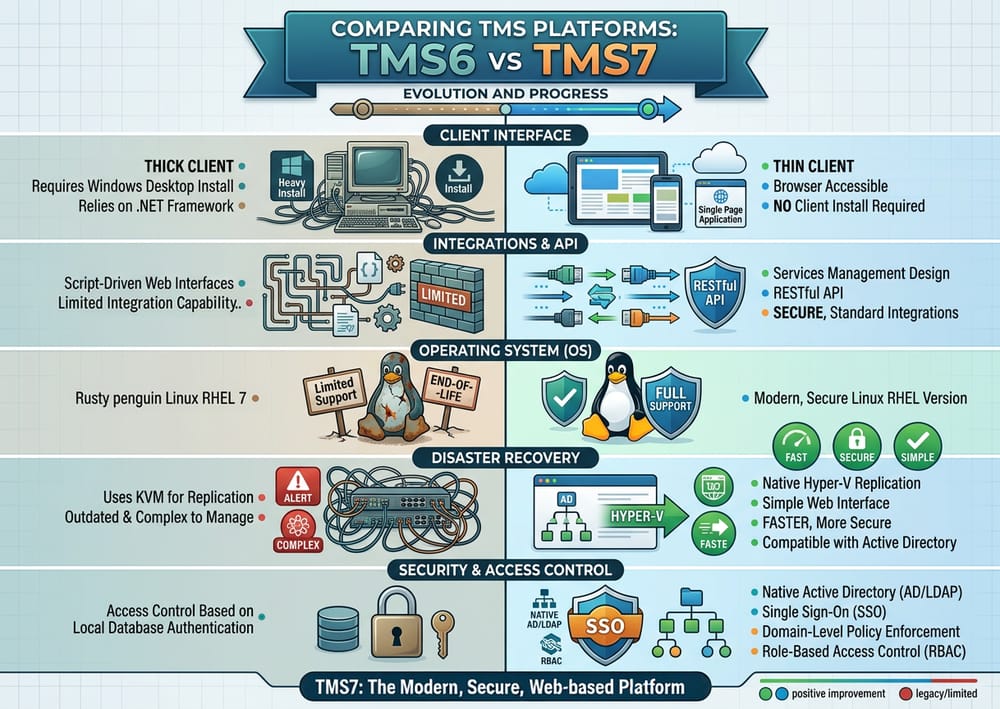
Platform differences
TMS6
TMS7
Client
“Thick” client – relies on a Windows desktop client installed version of Microsoft .NET framework
“Thin client” – single page Application with no client install required, accessible from modern browsers
Integrations
Script-driven web interfaces, with limited external integration capability
Services management design with a RESTful API for more secure, standard integrations
OS
Uses an end-of-life version of Linux RHEL 7, with limited support currently available
Uses the modern and more secure Linux RHEL version
Disaster recovery
TMS6 uses KVM for replication, which is outdated and very complex to set up and manage
Uses native Hyper-V Replication, with a simpler web interface, is faster, more secure and compatible with Microsoft Active Directory
Security, Identity & Access Control
Access control is based on a local database authentication.
Native Active Directory (AD / LDAP) and Single Sign-On (SSO) integration, allowing domain-level policy enforcement. Also supports
Role-based access control (RBAC)
See the visual comparison below:
What do these differences mean for the terminal?
Improved User Experience
Terminal personnel need quick access to information without navigating complex screens. TMS7 introduces a more modern interface designed to improve usability across operational workflows.
Operators can access critical information more efficiently while reducing training time for new users and administrators.
The result is faster adoption and improved day-to-day productivity.
Stronger Cybersecurity Readiness
Cybersecurity is no longer simply an IT concern. It has become an operational requirement.
As terminals become increasingly connected to enterprise systems, carriers, suppliers, and customers, security expectations continue to rise. For many operators, cybersecurity alone has become a major driver behind a terminal automation upgrade.
TMS7 provides a more modern foundation for implementing current security practices, helping organizations:
- Better align with corporate cybersecurity standards
- Support evolving authentication requirements
- Reduce exposure associated with aging infrastructure
- Simplify compliance initiatives
Enhanced Integration Capabilities
Terminal automation no longer operates in isolation.
Modern operations depend on reliable data exchange with:
- ERP systems
- Inventory management platforms
- Transportation management systems
- Business intelligence tools
- Customer and supplier portals
TMS7 provides enhanced integration capabilities that help terminals connect operational data with the rest of the business. This improves visibility, reduces manual processes, and enables faster decision making.
Better Long-Term Supportability
A terminal management system is a long-term investment. When evaluating TMS6 vs TMS7, many operators are looking at the next decade of operational requirements. Upgrading to TMS7 helps organizations position themselves for:
- Future software enhancements
- Ongoing platform support
- Infrastructure modernization
- Operational growth
- Emerging technology adoption
Rather than investing in maintaining legacy environments, operators gain a platform designed to evolve alongside their business.
When Does an Upgrade Make Sense?
Every terminal is different, but several signs often indicate it's time to evaluate an upgrade:
- Hardware approaching end-of-life
- Increasing maintenance effort for legacy systems
- Corporate cybersecurity initiatives requiring modernization
- New integration projects that stretch existing capabilities
- Multi-terminal growth requiring greater scalability
- Desire to reduce operational risk and technical debt
If several of these conditions apply, a structured upgrade assessment may reveal opportunities to improve both operations and long-term supportability.
The Bottom Line
The decision between TMS6 and TMS7 is about more than software versions.
It's about whether your terminal technology can continue supporting the demands of a rapidly changing operating environment.
While TMS6 has delivered proven reliability for many operators, TMS7 provides the capabilities organizations need for modern terminal automation, stronger cybersecurity, improved integration, and future scalability.
For operators planning the next phase of their terminal automation strategy, upgrading to TMS7 can provide a clear path toward greater operational efficiency and long-term resilience. These efficiency and security features can justify the cost of upgrading.
Still Running TMS6?
Whether you're planning infrastructure upgrades, addressing cybersecurity requirements, or simply assessing your long-term roadmap, now is a good time to evaluate what a move to TMS7 could mean for your operation.
Request a TMS6 Upgrade Assessment and our team will review your current environment, discuss your operational goals, and help you determine the most practical path forward.

Toptech Systems is a proud member of the global IDEX family which is recognized as the premier provider of Fluid and Metering Technologies, Health and Science Technologies, Fire and Safety Products, and Dispensing Equipment.

ABOUT US
MARKETS
PRODUCTS

Toptech Systems, Inc.
1124 Florida Central Pkwy
Longwood, Florida 32750
+1 (407) 332-1774
Toptech Systems NV
Nieuwe Weg 1 – Haven 1053
B-2070 Zwijndrecht / Belgium
+32 (0)3 250 60 60